
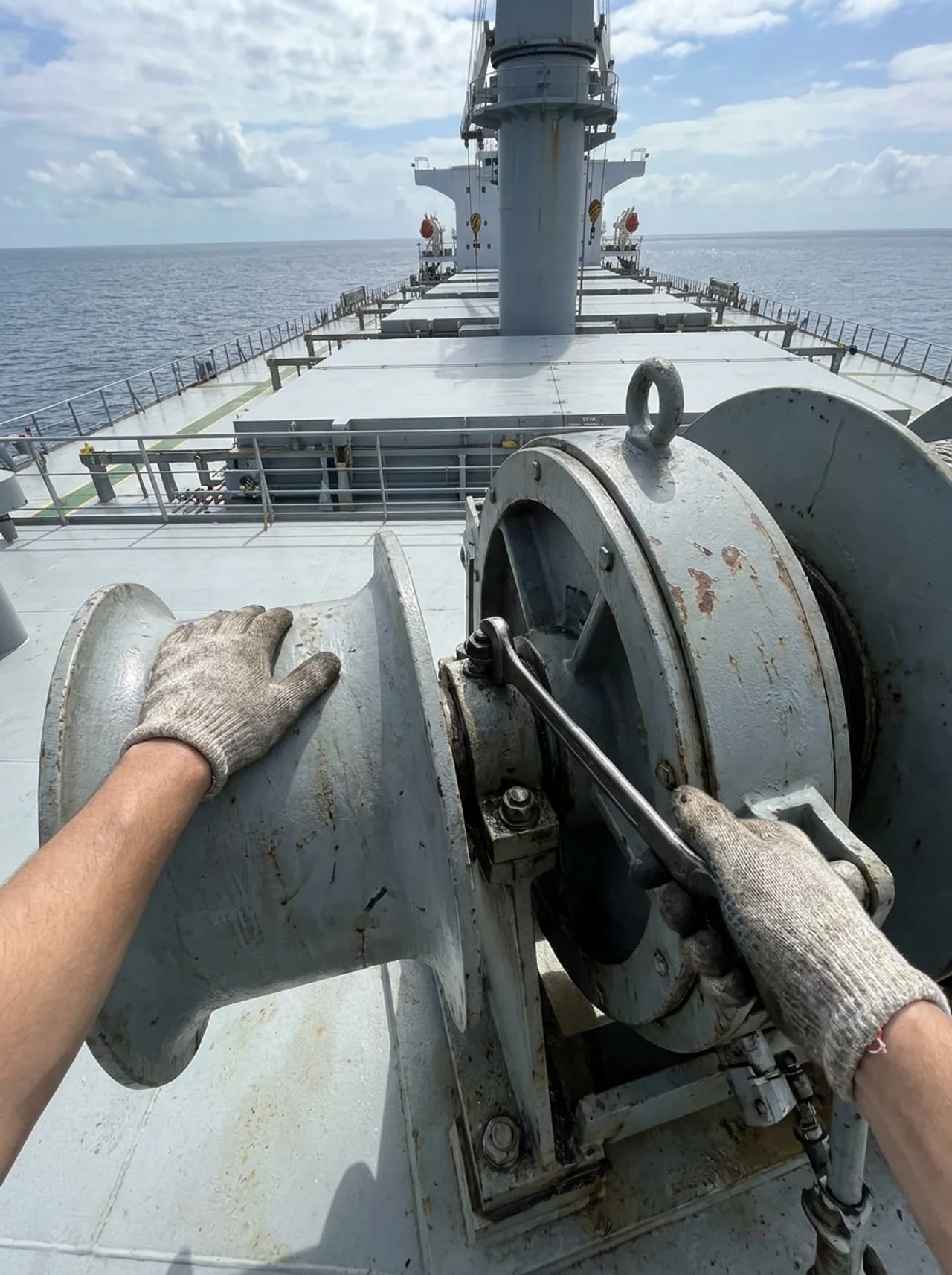
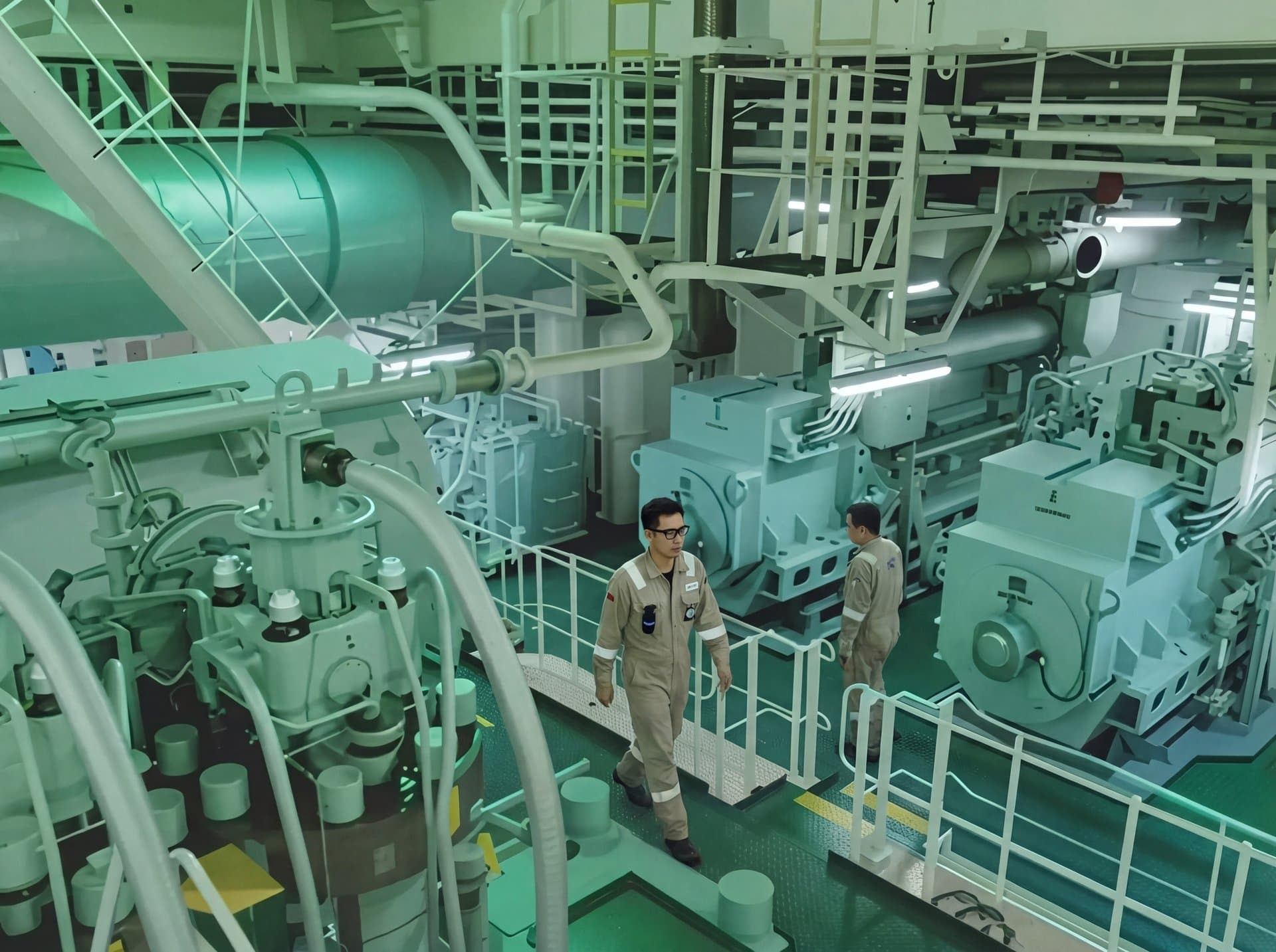
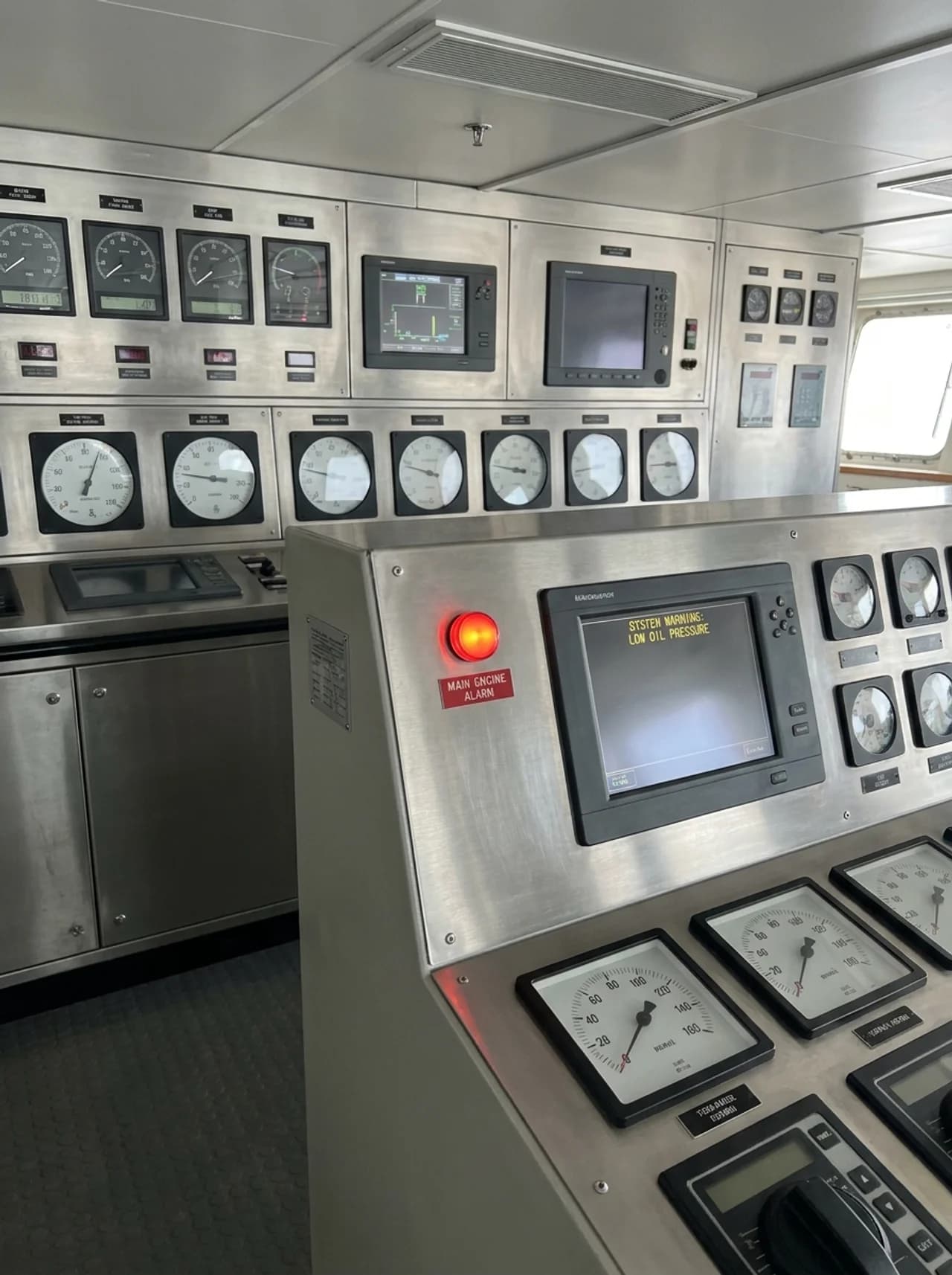
Your Eyes at Sea
Your shore team can't see what's happening on the vessel. Your crew on board can't get answers fast enough. MarinEye bridges that gap — AI on smart glasses keeps your office and your vessel in sync, in real time.
VESSEL INTELLIGENCE
AI that sees
what you see

CONNECTED VESSEL OPERATIONS
Your office and your vessel, connected
Unified vessel data
Maintenance schedules, work orders, class certificates, crew reports -- all surfaced through your glasses when you need them.
Zero training required
Put on the glasses. Start the inspection. The AI handles orientation, context, and guidance.
Living SOPs
Update inspection checklists and procedures instantly. Changes propagate to every vessel officer in real time.
Hardware agnostic
Software-only. Works with Meta Ray-Ban smart glasses out of the box.
AUTOMATION & FORESIGHT
The work that happens before you ask.
Most maritime AI tools wait for someone to ask a question. MarinEye doesn't. It routes every finding to the department that owns it, closes each case the moment the thread confirms it's fixed, and flags maintenance before it's due — quietly, in the background, while everyone gets on with their job.
CASES CLOSE THEMSELVES
A report that closes the moment it's fixed.
MarinEye reads the correspondence between crew and superintendents and resolves a report the moment the thread confirms the issue is fixed — so nothing stays open because someone forgot to close it out.
AUTOMATIC ROUTING
The right finding reaches the right desk. Nothing else.
Every flagged case is classified the moment it's logged and routed to the department that owns it: technical findings to the superintendent, compliance gaps to the DPA, parts requests to purchasing, safety items to HSQE. Each role sees what's theirs — not a noisy fleet-wide feed.
MAINTENANCE CALENDAR
Planned maintenance that's genuinely planned.
Every part carries its replacement interval. MarinEye warns the crew and the office ahead of each due date, so maintenance happens before something breaks — not after.
ON-PREMISE OFFICE AI
Your fleet's data never leaves the building.
Every office already uses cloud AI — which means fleet details, vendor quotes, and incident reports leave your company every day. Cloud-based maritime AI tools are no different; they just promise not to peek. MarinEye runs on hardware inside your office. Nothing leaves the firewall. Same AI, same memory as the vessel — but fully under your control.
On-premise. Never touches the cloud.
Deployed on hardware inside your office. No fleet data, no vendor quotes, no incident reports ever leave your network — not to cloud AI, not to us, not to anyone.
Air-gapped by design
Other maritime AI tools are cloud chatbots that promise privacy. MarinEye runs on your hardware, behind your firewall — the only privacy guarantee that survives a security audit.
Trained on your history
Reads every past repair, voyage, vendor quote, and incident report you've filed — so it answers like a 30-year veteran of your fleet, not a generic chatbot.
One memory, vessel and office
The same AI that guides the crew on board powers the office. What the glasses see at sea, the office can ask about on land — instantly.
BUILT FOR CLASS & FLAG STATE AUDITS
Every inspection
documented.
Every fault tracked.
Complete audit trail of every inspection and corrective action — ready for class society deficiency reports, flag state audits, and insurance investigations.

22 crew per vessel
Start with deck and engine officers
Scale to every officer and rating across the entire vessel.
Measurable impact
Track what matters
Issues caught, rework prevented, and response time reduced — measured across every vessel.
Always learning
Smart data flywheel
Every guided inspection generates data that makes the system smarter.
THE BIGGER PICTURE
Beyond cost savings
a new way to operate
AI guidance doesn't just prevent mistakes. It closes the skilled labor gap, turns cadets into experienced engineers, and generates the ship-repair data that will train the next generation of AI.
What we hear from the field
“Finding experienced marine engineers is the hardest part. New hires can't follow basic inspection procedures on the vessel — every missed fault compounds over time.”
Fleet Maintenance Manager
North Sea Operations
“We lose 14 hours a week per technician to miscommunication and rework. That's not a people problem -- it's an information problem. The data exists, it's just not where the crew is.”
Industry Data
McKinsey Maritime, 2023
“If you could put a junior engineer on a VLCC and have them perform like a veteran from day one, that changes how you run every vessel in the fleet.”
Shipyard Superintendent


